Unfortunately, our code must stay private, but I’ll explain the concepts and tools we used.
Description
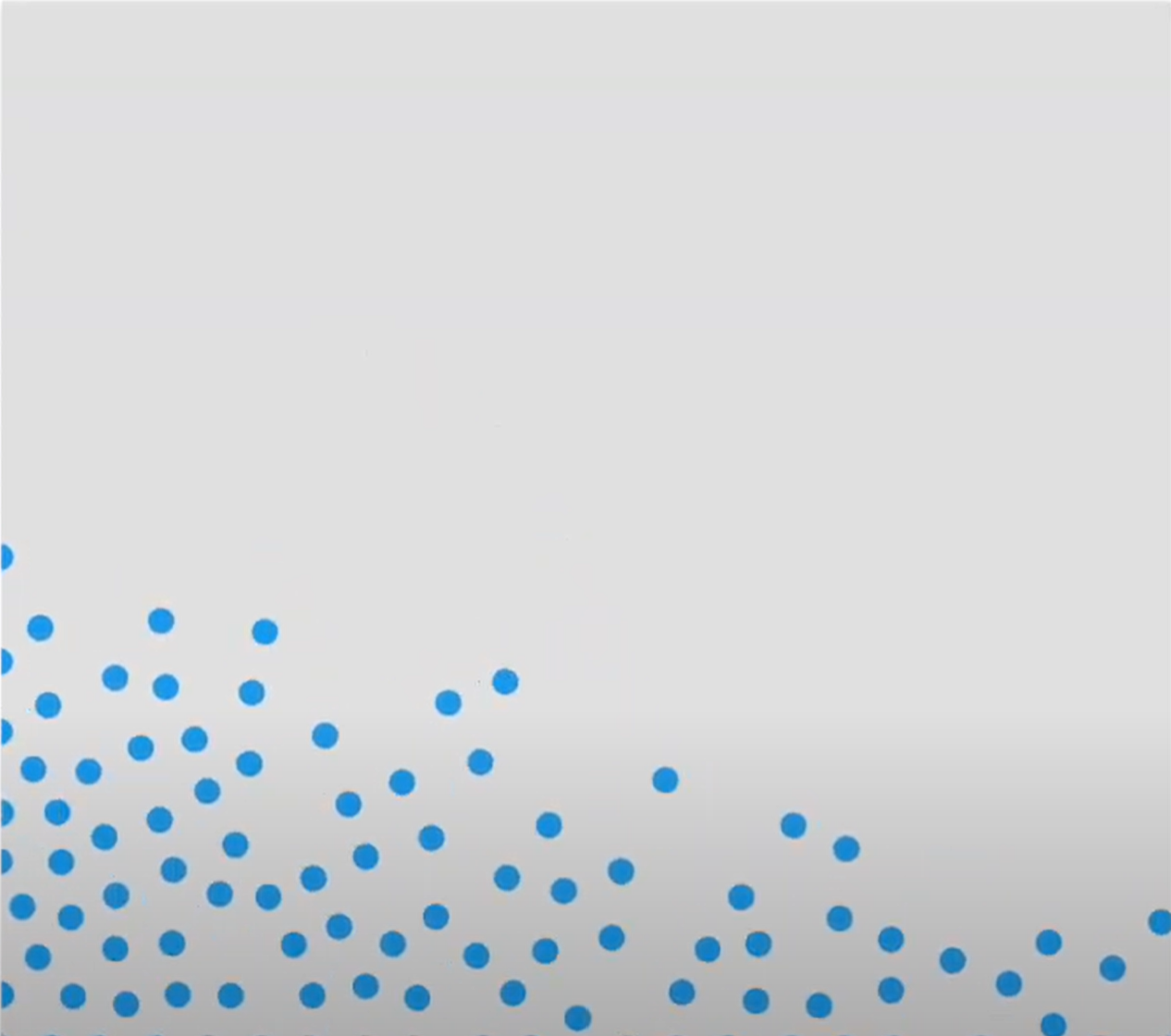
This project was developed as a capstone project for my numerical computing class in Spring 2024. We were given the task to simulate water particles falling in a bucket and observe how the particles interact with each other and the edges of the bucket. This was a daunting task, since we had to incorporate physics and matrix algebra along with computationally-intensive recusive searches. The project was coded in Python.
Grid-based Neighbor Search
- We lineated our bucket with a grid. Each particle is assigned a certain grid square based on their coordinate.
- We created a particle class with data fields such as position, density, and force, with a gridKey that allows the program to quickly identify which box in the grid the particle belongs to.
- The neighbor search method finds the closest particles to particle i based on a smoothing radius. We calculated distance with norm.
Cubic Spline
- Referencing scientific research, we implemented cubic spline functions to calculate how much each surrounding particle should influence particle i based on their magnitude and direction of force.
Calculations
- Calculating force and position was done through fixed formulas. We also accounted for the water repelling the bucket’s surface using boundary force formulas.
Results
- We were able to simulate water falling in a bucket and observe how the particles interact with each other and the edges of the bucket.
- We were able to observe the formation of a droplet and how it interacts with the bucket’s surface.